Groundbreaking study from Cambridge University identifies microscopic threat inside your pancreas that’s been sabotaging your blood sugar control—and explains why diet, exercise, and medication alone will never be enough until you address it.
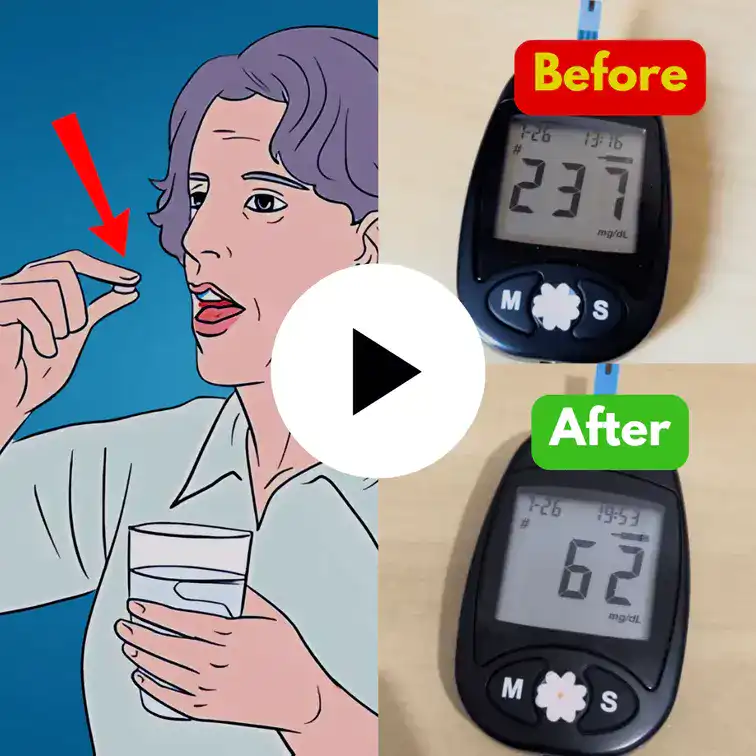
If you’ve been following a strict diabetic diet…
Cutting carbs, avoiding sugar, tracking every meal…
Taking your medications exactly as prescribed…
Maybe even exercising 5 days a week…
And your blood sugar STILL won’t stabilize…
This isn’t about lack of willpower.
It’s not because you’re “cheating” on your diet.
And it’s definitely not your fault.
According to researchers at the University of Cambridge who studied over 100 pairs of siblings—one diabetic, one healthy—there’s a hidden factor that determines who develops type 2 diabetes and who doesn’t.
Same genes. Same household. Same eating habits.
Yet only ONE sibling became diabetic.
The difference?
A microscopic organism was found lodged inside the pancreatic tissue of 97.8% of diabetic subjects… but in ZERO healthy subjects.
This organism feeds on insulin and attacks the beta cells in your pancreas—the very cells responsible for blood sugar regulation.
Here’s why this matters:
→ Every time you inject insulin or take metformin, you’re feeding this organism
→ It multiplies faster, making your condition progressively harder to control
→ Your body loses its natural ability to produce GLP-1 (the hormone that regulates glucose)
That’s why people can do “everything right” and still see their numbers climb.
The real problem was never addressed.
Dr. Robert Stevens, a board-certified endocrinologist and senior researcher at Johns Hopkins, spent 18 months developing a natural protocol to eliminate this organism and restore your pancreas’s ability to regulate blood sugar naturally.
In a clinical study with over 6,000 participants:
✓ 96% achieved stable blood sugar within 90 days
✓ Many were able to eat pasta, pizza, even desserts without spikes
✓ Average weight loss: 32 pounds over 6 months
✓ Participants reported renewed energy, better sleep, and freedom from constant monitoring
This short presentation explains:
- What this organism is and how it got into your pancreas
- Why traditional treatments can’t eliminate it (and may make it worse)
- The exact 4-phase protocol Dr. Stevens used to help thousands regain control
Scientific References:

The information presented here is intended for educational purposes only and should be considered as a source of inspiration.
Results shared are based on individual experiences and may vary depending on many personal factors.
This content doesn’t guarantee outcomes — each person’s path is unique.
Any decisions made based on this material are entirely up to the reader’s personal discretion.
Use this as a reference point to explore what might — or might not — work for you.